1066 and all that: a brief history of the Treasury

Early days

Today’s Treasury dates from around the Norman Conquest.  Even before 1066, the Anglo-Saxon Treasury collected taxes (including the danegeld, first levied as a tribute to the Vikings to persuade them – sometimes unsuccessfully -to stay away) and controlled expenditure.  The first “Treasurer” was probably “Henry the Treasurer”, who owned land around Winchester, where most of the royal treasure was kept under both the Anglo-Saxons and the Normans.  Henry  is referred to in the Domesday Book (a systematic tax assessment of the whole country undertaken by the Treasury) and is believed to have served William the Conqueror as his Treasurer, though what he actually did remains obscure. 

For most of the mediaeval period the office of the Treasurer was within the Exchequer, which managed and accounted for the royal revenue, as well as collecting and issuing money. The Exchequer wasn’t always effective at its job:  in 1433, for example, war with France had led to a deficit of £30,000 – the equivalent of over £100 billion today. 

The origin of the name “exchequer” derives from the chequered table (based on the abacus) which was used from about 1110 for calculating expenditure and receipts.  Exchequers were normally held twice a year when the Chief Justice, the Lord Chancellor, the Treasurer and others sat round the chequerboard, auditing the accounts of each local Sheriff who collected and spent money on behalf of the Crown.

“The Exchequer is an oblong board measuring about 10 feet by 5…with a rim around it about four finger breadths in height, to prevent anything set on it from falling off.  Over it is spread a cloth, bought in Easter term, with a special pattern, black, ruled with lines a foot, or a full span, apart.  In the spaces between them are placed the counters, in their ranks.

The accountant sits in the middle of his side of the table, so that everybody can see him, and so that his hand can move freely at its work.  In the lowest space on the right, he places the heap of the pence; in the second the shillings; in the third the pounds…As he reckons, he must put out the counters and state the numbers simultaneously, lest there should be a mistake in the number.  When the sum demanded of the sheriff has been set out in heaps of counters, the payments made into the Treasury or otherwise are similarly set out in heaps underneath.  The lower line is simply subtracted from the upper.”  The Dialogue on the Exchequer, 1177.

Money received by the Treasury was recorded by using tallies.  These were sticks about 8 inches long, on which notches were made of different sizes according to the amount of money involved.  The stick was then cut in 2 and one half given to the Sheriff  as a receipt for the money. Tallies remained in use until 1834 when a fire destroyed the Palace of Westminster.

back to top

Tudors and Stuarts

Because the Exchequer was so ineffective, it tended to be bypassed by monarchs until reformed by the Lord Treasurer Winchester and his successor, Burghley, under Elizabeth 1.  By 1584, the deficit had been turned into a surplus equivalent to one year’s revenue.  Elizabeth called Burghley “Both her Treasurer and her principal treasure.”

The Stuarts, however, weren’t so good at managing money and their Treasurers couldn’t enforce control. War, inflation, corruption and extravagance led the Stuarts deeply into debt.  After the Restoration, Charles II was so poor that the English Navy was seriously underfunded, culminating in the humiliating seizure of the navy’s flagship, the Royal Charles, by the Dutch in 1667.  Soon after, Charles II appointed a Commission to replace the Treasurer.  George Downing – who built Downing Street - was appointed Secretary to that Commission and was instrumental in major reforms which led to the Treasury breaking away from the Exchequer. In June 1667, it was “ordered that the several (ie departmental) treasurers…do forebear making any payments without directions from the Commissioners of his Majesty’s Treasury”. This principle – that even if money has already been voted by Parliament all expenditure must have specific Treasury approval – still holds today.

Downing was also responsible for raising additional money by selling marketable Treasury orders with a guaranteed repayment date; the origin of today’s government bonds.  In the same period, tax collection was taken out of the hands of private firms, who had made huge profits from the activity, and nationalised under Commissioners reporting to the Treasury.  Other famous  people who worked for the Treasury in the second half of the seventeenth century included the philosopher John Locke, who acted as an unofficial economic adviser to the Treasury, and Isaac Newton, who was Master of the Mint.

This period saw a number of other developments which govern the system of public finance we have today: for example, the establishment of the principle that Parliament votes expenditure annually; and the foundation of the Bank of England in 1694, initially to manage debt finance, but soon coming to issue interest-bearing transferable Exchequer Bills, payable on demand. 

back to top

And then…

The first half of the eighteenth century saw rapid developments in banking and financial markets, with an embryo stock market which revolved around government funds.  These developments had a major impact on government finances: money could now be raised by means of creating debt through the issue of bills and bonds – the start of the National Debt.

The private sector’s willingness to lend money to the government was partly due to the establishment of better controls over public spending – creditors were more likely to get their money back.  By the 1730s an early version of the public spending survey and the annual Budget had been established.  (The word “budget” derives from the term “bougette” – a wallet in which either documents or money could be kept).

There were some hiccups in the process.  In 1711, the Treasury unveiled a scheme to secure government debt by authorising its subscription into the capital of the South Sea Company – government creditors received stock in the company.  When the South Sea Bubble burst in 1720, however, thousands of investors were affected and the Chancellor of the Exchequer was sent to the Tower of London.  The Treasury learned a valuable lesson which still holds today: that the National Debt – and public finances generally - need to be managed prudently.

Over the course of the eighteenth century the financial orthodoxy became one of free trade, balanced budgets and stable exchange rates.  In 1789, Pitt the Younger introduced income tax for the first time.

The Exchequer was finally abolished in 1833 when the Treasury became a ministerial department under the Chancellor of the Exchequer. Under Victoria, the powerful position of the Treasury was consolidated by reforms which introduced open competition for posts in the civil service and appointment on merit, coupled with internal reforms to cut paperwork which improved morale and efficiency.  At the same time, the Exchequer and Audit Act of 1866 improved the control and audit of public money by establishing a new Audit Department, headed by the Comptroller and Auditor General who continues to audit public expenditure today.

back to top

The Twentieth century

The two World Wars of the twentieth century were pivotal points in the development of today’s Treasury.  On Sunday 2 August, John Maynard Keynes, having hijacked a motorbike in Cambridge,  came to the Treasury in response to a plea for help from an old friend.  British banks were in crisis because of the impending European war; half of the world’s trade was financed by British banks and international payments were drying up.  Keynes persuaded Lloyd George (then Chancellor) to use the Bank of England’s gold reserves to shore up the banks, which swiftly ended the immediate crisis.  Keynes stayed with the Treasury until 1919.

During the 1914-18 war, the Treasury developed new expertise in foreign exchange, currency, credit and price control skills which it put to use in the management of the post-war economy.  On the downside, the demands of the military and failure to increase taxes sufficiently to meet the bulk of wartime expenditure meant the Treasury effectively lost control of spending by departments. 

Following the war, therefore, there was a further period of reform which changed the Treasury’s relationship with departments, first,  by giving the Treasury control over other departments’ staffing and pay arrangements.  Secondly,  the principle that the Permanent Secretary of each department should be accountable for his or her department’s expenditure was reasserted - policy considerations and financial considerations should be inseparable. Financial control became a departmental, as well as a Treasury, responsibility.

The lessons of the slump in the 1930s and the need to restructure and rebuild the economy following World War 2 meant the Treasury changed shape again from 1945.  The influence of Keynesian economics meant there was more emphasis on general economic planning, though the Treasury continued to exert control over departmental spending.  There was also increasing emphasis on international financial relations, though this was an area which had been growing in importance since 1914. The 1950s and early 1960s saw further reviews of Treasury control, and an increase in the authority delegated to departments to spend within predetermined totals. 

For a short period from 1964 some of the responsibility for economic planning and growth was transferred to the new Department for Economic Affairs.  The Department was, however, wound up in 1969 and the responsibility for all economic planning reverted to the Treasury.  Soon after, in 1970, responsibility for staffing and pay matters was transferred from the Treasury to a new Civil Service department, meaning the Treasury could concentrate on the core business of finance and economics.

Membership of the European Community from the 1970s led to further developments in the Treasury’s role, managing not only the UK’s contributions to the EU budget but in pressing for improvements to the management of European finances generally.

A final significant development in the twentieth century was the transfer of monetary policy to the Bank of England in 1997, while the Treasury retained control of fiscal policy.

back to top

2001…

The year 2001 marked a major reform in government finances managed by the Treasury.  Traditional cash accounting for income and expenditure was replaced by “resource accounting and budgeting” which introduced commercial-style budgets and accounts in government.  These effectively replaced procedures which had been in place, with some modifications, since the Exchequer and Audit Act of 1866.

The Chancellor of the Exchequer

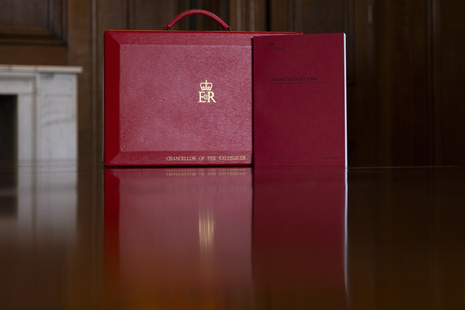
The office of Chancellor of the Exchequer dates from about the 13th century.  In the mediaeval Exchequer there was both a Treasurer and a  Chancellor (the King’s Chancellor.) The Treasurer was responsible for superintending every department while the Chancellor acted as a check upon the accounts of the Treasurer.  Over the years, the Treasurer and the Chancellor delegated more of their duties to, respectively, the Under Treasurer of the Exchequer and the Chancellor’s clerk.  In the reign of Henry III, the Chancellor’s Clerk became an officer of the court as the Chancellor of the Exchequer.  Under Elizabeth 1, the office of Under Treasurer was joined to that of Chancellor of the Exchequer though it wasn’t until the eighteenth century, when the Chancellor of the Exchequer  became the second Lord Commissioner of the Treasury, and the Prime Minister became the first Lord of the Treasury, that the office assumed something like its modern form.

back to top
About HM Treasury index page